

6 Rental Property Budget Mistakes That Can Hurt Your Cash Flow
Real Estate CoachingBy Cynthia Meyer, CFA®, CFP®, ChFC®
What you will get from this article:
 Real estate is often viewed as a source of passive income because of its tax treatment, but in the day to day operations, it’s still a business. And like with any business, the numbers are important.
One of the most common mistakes that we see real estate investors make is focusing too heavily on the numbers they see at the time of purchase. They estimate a rent figure, project cash flow, and determine whether a deal may “work” without considering all of the factors and continuing this analysis over time.
That’s where investors can start to experience cash flow concerns or put pressure on their cash reserves. Unrealistic assumptions around expenses, vacancy, or rental income can lead to problems that may not be apparent at the time of purchase.
That’s why, in this article, we’re going to talk about some of the most common rental property budgeting mistakes we see, and how real estate investors can plan for them.
Mistake #1: Underestimating Variable Expenses
The first mistake that we see with real estate investors, especially those who are newer to the rental property business, is underestimating all of the variable expenses involved.
It’s relatively easy to figure out the cost of your mortgage, property taxes, and property insurance; these may even all be deducted every month by your mortgage company. But things like maintenance and repairs, utilities, garbage, water, landscaping, snow removal, capital expenditures, etc., can all add up quickly.
Maintenance is one area where those costs can really add up, and these costs should be accounted for. As a rule of thumb, maintenance costs should be about 1-4% of the purchase price annually. The lower end would be for more well-maintained and newer properties, while the more conservative 4% would be for older properties that may require more upkeep.
These expenses don’t happen every month, but you want to plan for them and set the funds aside in cash reserves for each property so that you’re prepared when those big expenses come up.
Mistake #2: Not Budgeting for Vacancy and Turnover
Another area where rental property budgets can get thrown off is vacancy. When you work through your initial calculations, you may be assuming a certain rate of vacancy in your unit, but projections can be very different from the actual performance.
Vacancy rates can be affected by a lot of factors. Each area and type of property will have a different level of supply and demand, so you want to think about how long it will take you to fill a vacancy in the market your property is in.
Between each tenant, there are turnover costs aside from the lost revenue while the unit sits vacant. Whether that’s cleaning, painting, replacing floors, or completing repairs, there’s usually some level of work that needs to be put into a property between tenants.
This bump in expenses should all be part of your rental property budget.
Mistake #3: Ignoring Property Management Costs
 Even if you’re planning to manage your property yourself, at least for the first few years, you want to account for these costs in your budget.
Someone has to be doing the work of managing a property - collecting rents, talking to tenants, handling the legal paperwork. It’s important to know that the numbers will still work even if you have to hire a property manager at some point.
While you may plan to do all this yourself, sometimes things come up that may require you to hire someone for property management. Maybe you have to relocate for a job, or maybe something happens that physically stops you from being able to manage a property yourself. These often are unexpected situations, so you want to make sure the numbers still work if you need to outsource.
If you’re opting to manage a property yourself, you also want to factor in the opportunity cost of your time being spent on property management and not in other areas that could be more profitable. Deciding to outsource this role is an entirely personal decision, but you’ll want to be aware of all factors.
Mistake #4: Not Maintaining Enough Cash Reserves
Having sufficient cash reserves set aside when you first purchase a property is critical, but what happens when expenses come up that start to drain those reserves?
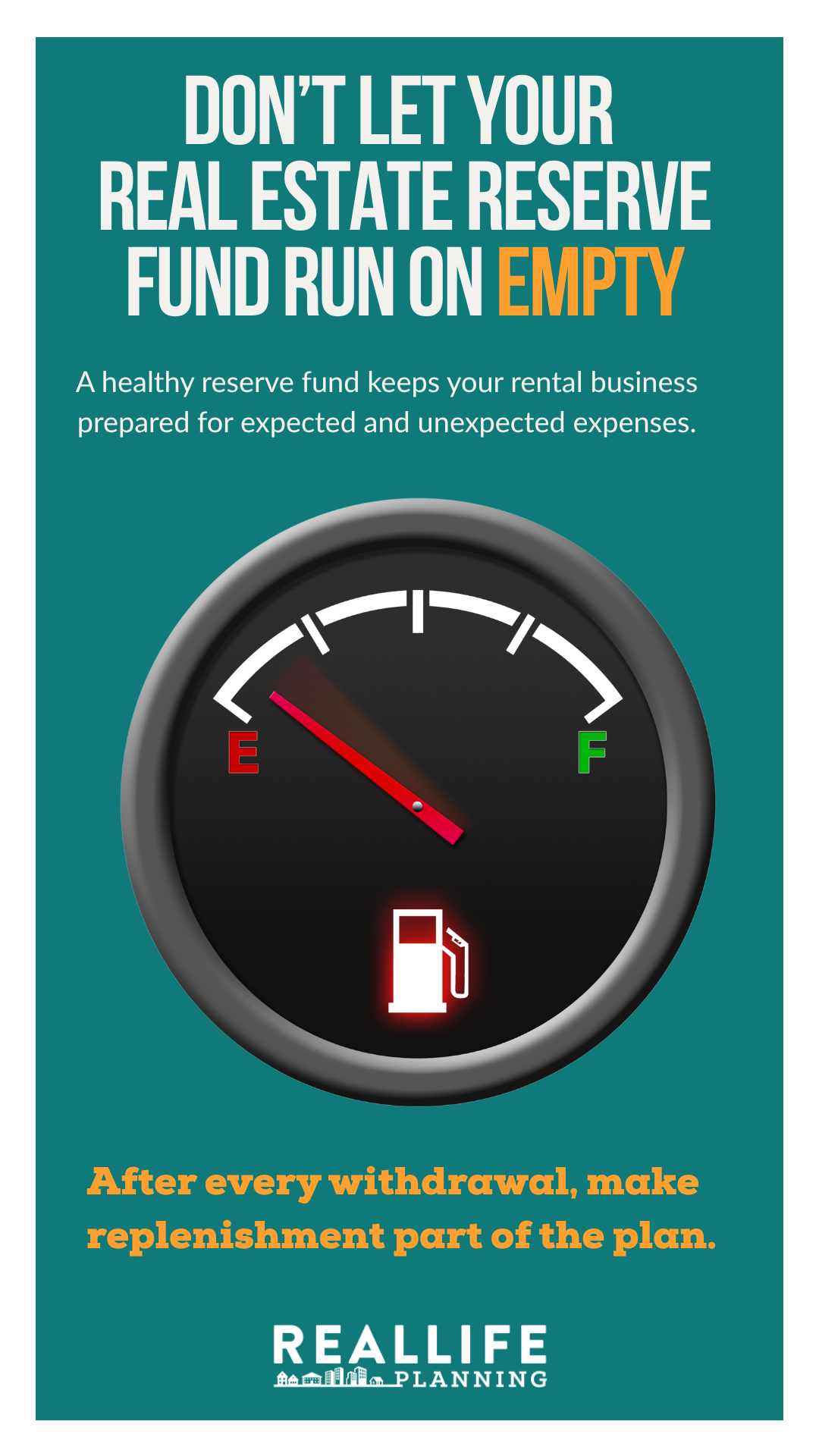
A common mistake we see with real estate investors is not maintaining enough reserves over time. As a rental property investor, it’s important to continue contributing to these reserves every month.
As we mentioned before, things like capital expenditures, vacancy rates, planned spending, repairs, and turnover will all require you to have enough cash to cover costs.
That typically means setting aside a portion of income each month and keeping those funds separate from your operating cash, so they’re available when needed. This allows you to plan for both expected expenses, like maintenance and turnover, as well as those unexpected ones.
It’s also worth noting that while lenders often require reserves at the time of purchase, that’s only the starting point. Maintaining and growing those reserves is an ongoing responsibility.
Mistake #5: Not Tracking or Reviewing Financial Performance
 The fifth rental property budgeting mistake that we see come up is not regularly monitoring your actual budget versus your projected budget. Even with a solid budget in place, it only becomes useful if you actually track how the property performs over time.
At a minimum, investors should be comparing:
- Budgeted numbers vs. actual performance
- Net Cash Flow
- Net Operating Income
- Return on Equity
- Return on Assets
- Annual trends across income and expenses
Looking at performance over a full year is especially important. Month-to-month results can vary significantly, especially when you factor in vacancies, repairs, or turnover costs. A longer view helps smooth out those fluctuations and gives a clearer picture of how the property is truly performing.
From there, you can start to identify patterns in expenses, cash flow, and capital expenditures. This can help you get a better understanding of whether your rent is sufficient to cover these expenses over time, or if it should be adjusted between tenants (or raised for existing tenants within the terms of your lease, typically around 5%).
Mistake #6: Not Budgeting At All
While not keeping track of how the real numbers compare to budgets is a common mistake, some investors don’t track their budgets at all.
Without a clear budget, it can be very difficult to understand how a property is performing and if it’s actually profitable for you. Especially for newer real estate investors, figuring out the right numbers can be a “learn-by-doing” experience. Not tracking rents, expenses, capital expenditures, and vacancy rates makes it harder to learn over time.
A budget provides a framework for how a property should perform, but without anything to compare to, it’s nearly impossible to answer questions like:
- Is this property actually generating positive cash flow?
- Are expenses higher than expected?
- Is rent set at the right level?
Some investors use spreadsheets like Excel, some use rental property software like Stessa, while others opt for accounting software like QuickBooks or a combination of the two. However you decide to track, it’s important that you can visibly stay on top of income and expenses and how they change over time.
Manage Numbers Over Time
When it comes to rental property investing, the difference between a property that performs well and one that underdelivers often comes down to how the numbers are managed over time.
 Underestimating expenses and vacancy rates, or not building reserves and keeping track of the numbers, can turn an initially strong deal into a frustrating one. Your rental property budget is your financial plan expressed in numbers, and you can’t improve what you don’t track.
While real estate investing is typically looked at as passive income for tax purposes, it’s not passive in effort. It’s a real estate business that requires ongoing attention. If you’re investing or evaluating your next property, we urge you to take the time to review your assumptions and budget regularly.
If you found this helpful, check out more insights on the Real Life Blog for guidance on managing and growing your real estate investments.