

7 Reasons to Hire a Property Manager for Your Real Estate Business
Real Estate CoachingBy Cynthia Meyer, CFA®, CFP®, ChFC®
What you will get from this article:
At some point, managing your own rental properties can become a full-time job of its own, and not every real estate investor wants that job. What may start as a way to save money can quickly turn into hours spent coordinating repairs, answering tenant questions, tracking payments, and handling turnover.
That’s when many rental property owners start to consider working with a professional property manager. They can come in to help with many different aspects of the property management, and bring their own experience to the table.
As a real estate financial planner, I see many popular reasons that investors will start to work with a property management company. In this article, we’re going to cover 7 of the top reasons we hear as to why a rental property owner may hire a professional property manager.
#1: A Property Manager Can Become a Strategic Partner
 A good property manager does more than handle the day-to-day tasks of collecting rent, coordinating maintenance, and responding to tenant issues. For real estate investors, the right property manager can become a strategic partner in the business.
Because they are close to the market and involved in the ongoing operations of the property, they often provide insight that helps with bigger-picture decisions. That may include when to raise rents, how a property is performing compared to the rest of the portfolio, or whether certain properties are underperforming (relative to their potential).
This can be especially valuable for investors who are scaling a portfolio, considering future purchases, or considering a larger strategy like a 1031 exchange. A property manager may help identify which properties are worth holding, which may be better candidates for sale, and what improvements could increase rental return.
They can also help investors stay aware of local changes that may affect rental property ownership, such as new rental regulations, short-term rental rules, market shifts, or emergency housing programs.
In that sense, a property manager is much more than operational support. The right person can become part of the decision-making process behind your real estate business.
#2: You Don’t Live in the Area
Self-management can be much harder when you don’t live near the property. If something goes wrong, distance can make even a simple issue more complicated. Emergencies, repairs, inspections, tenant concerns, vacancies, and difficult tenant situations are all harder to handle when you cannot easily get to the property yourself on short notice.
A property manager provides boots-on-the-ground help. They can respond to issues, coordinate vendors, meet inspectors, check on the property, and handle problems that may not be realistic to manage well from hours away.
This can be especially helpful for out-of-state investors, owners with properties across multiple markets, or investors who want the flexibility to buy in areas beyond where they personally live.
Working with a property manager can expand your investment options because you are not limited to properties within driving distance. It can open the door to new markets while still giving you a local person who understands the area and can help oversee day-to-day operations.
Remote ownership can work, but it becomes much more workable when you have trusted local support.
#3: Your Time May Be Better Spent Elsewhere
 Rental properties come with more carrying costs beyond the mortgage, taxes, and maintenance expenses. They also require time, attention, and ongoing decision-making.
Self-managing a property can involve late-night calls, repair coordination, tenant communication, inspections, vendor management, emergencies, and unexpected interruptions that compete with the rest of your life and work responsibilities.
For some investors, that tradeoff is worth it, but for others, especially higher-income earners or business owners, it becomes important to think about that opportunity cost.
If your time is highly valuable elsewhere, self-management may not actually be the most efficient use of your energy, even if it appears to save money on paper; saving money and creating efficiency are not always the same thing.
Hiring a property manager can allow property owners to spend more time focused on their career, business, family, or future investment opportunities instead of being pulled into the day-to-day operational demands of the property. It can also reduce some of the stress and interruptions that come with managing rental real estate directly.
#4: Tenants Are Not Property Managers
Some self-managing landlords end up relying heavily on tenants to report problems as they come up; the challenge is that tenants may not always know what to look for.
A small leak, early water damage, unusual appliance issue, or maintenance concern may not seem urgent to someone who has never owned a home or managed property before. They may not understand how quickly a small issue can become a larger and more expensive repair.
For example, a slow leak that goes unreported for several months may start as a relatively minor plumbing repair but eventually lead to significant water damage, mold concerns, or structural issues.
Regular property inspections can help identify these kinds of problems earlier, before they become more expensive to resolve. A property manager can provide that added layer of oversight by checking on the property, noticing early warning signs, and managing repairs before small issues become larger ones.
#5: Property Managers Have Systems, Teams, and Vendor Relationships
 A lot of the value of working with a property manager comes from the experience they bring.
When someone handles a turnover once a year, they are starting from a very different place than someone who manages turnovers, maintenance requests, inspections, leasing workflows, vendor scheduling, security deposit processes, and municipal requirements every single month.
Over time, that repetition is what creates better systems. A professional property manager does not have to figure out each situation from scratch. They typically have processes in place for getting a unit ready to rent, coordinating repairs, communicating with tenants, documenting issues, and handling more complicated situations when they come up.
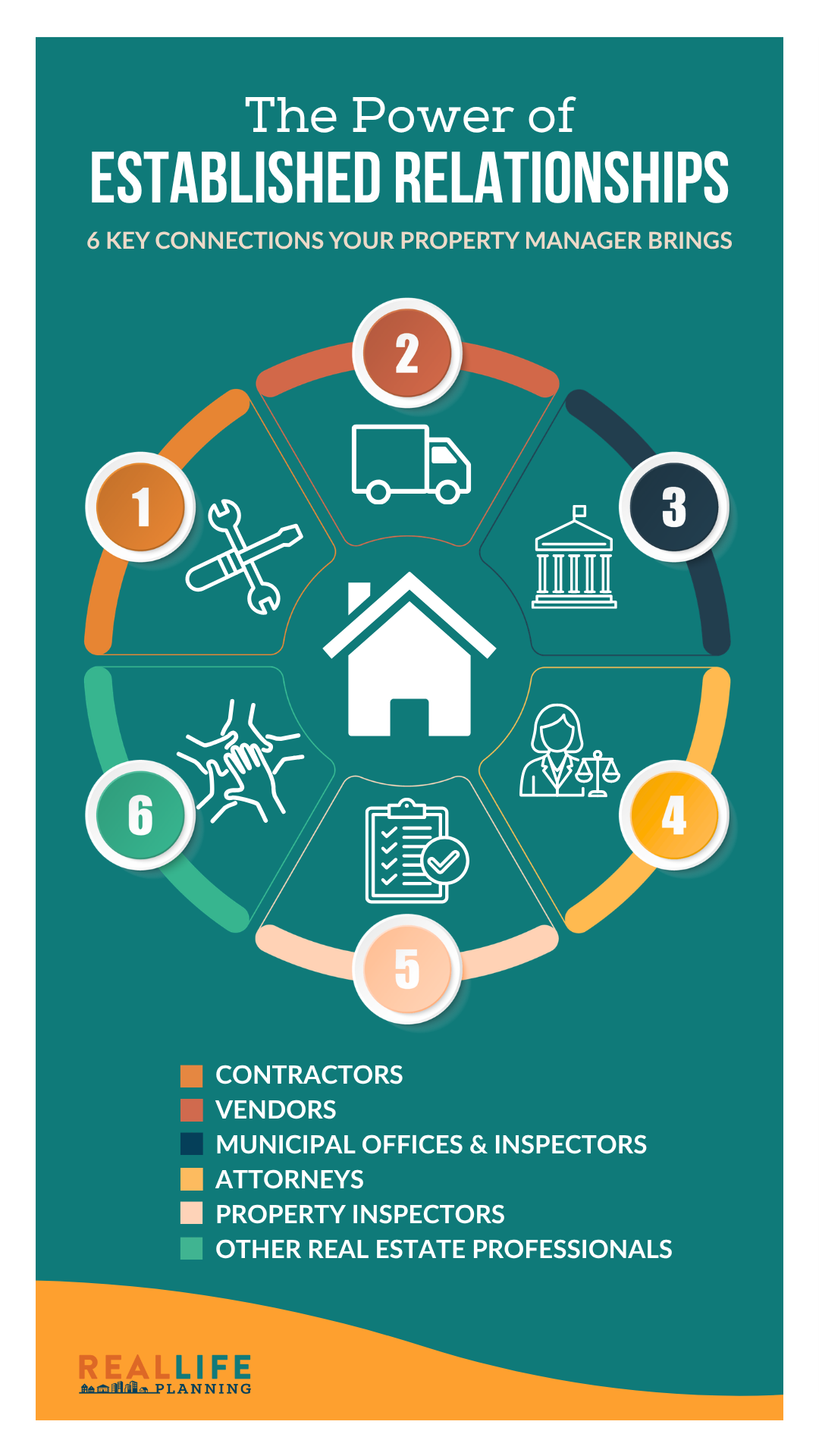
They also tend to have established relationships with contractors, vendors, municipal offices, inspectors, attorneys, and other professionals involved in rental property ownership, which can be valuable when timing matters.
If there’s an emergency repair, a tight turnover window, a municipal inspection, or a larger project that needs to be handled quickly, those relationships can help the process move more smoothly. A property manager may also have more leverage with vendors because they are providing repeat business, not calling for a one-time job.
For investors, this can turn into better response times, more reliable work, and fewer hours spent trying to find the right person for each issue. Having someone come in with systems and established relationships can save investors both time and money.
#6: You May Not Want to Deal Directly With Tenants
Tenant communication requires boundaries, consistency, and the ability to handle conflict professionally. For some owners, that part of the job is the most difficult.
It can be uncomfortable to follow up on late rent, address lease violations, respond to complaints, or move forward with an eviction when needed. Sometimes, owners may become too emotionally involved, especially when tenants share personal circumstances or ask for exceptions.
A property manager can create a professional buffer between the owner and the tenant, with separation that helps keep the relationship focused on the lease, the property, and the responsibilities of both parties. Housing is still a business relationship, and it tends to work best when expectations are clear and applied consistently.
A property manager can also help protect the owner’s privacy. Instead of sharing personal contact information or being pulled directly into every dispute, the owner can rely on a neutral third party to communicate, document issues, and manage difficult conversations.
For investors who don’t enjoy tenant communication or who struggle to stay objective in hard situations, this can be one of the biggest benefits of hiring professional management.
#7: Compliance Can Be More Complicated Than Many Investors Realize
Compliance is one of the areas that many first-time landlords can underestimate. Leasing and managing rental property is more than just a matter of finding a tenant, collecting rent, and handling repairs. Landlords also need to understand fair housing laws, local rental regulations, screening requirements, notice rules, licensing requirements, and proper documentation.
Informal decision-making can create real risk for your business. For example, screening criteria need to be applied consistently to every applicant. If one applicant is held to a different standard than another, even unintentionally, that can create exposure for discrimination claims or fair housing issues.
Property managers often have standardized systems to help reduce that risk. That may include documented leasing workflows, written screening criteria, notice templates, compliance procedures, and established processes for handling late rent, lease violations, and evictions.
Those systems help protect both the owner and the tenant by creating a more consistent and professional process.
A good property manager is a strategic partner
Hiring a property manager is not just about avoiding late-night phone calls or handing off tenant communication, but about deciding how you want your real estate business to run.
A good property manager can help protect your time, create more efficient systems, support compliance, and make it easier to scale beyond what you can reasonably manage on your own. Real estate investing is usually a team effort. And as your portfolio grows, the people on that team become even more important.
The right property manager can be a valuable long-term partner in the business — not just someone who collects rent, but someone who helps protect the property, support the tenant relationship, and keep the investment moving in the right direction.
If you’re currently self-managing, it may be worth considering whether that still fits your goals, your time, and your growth plans.
For more insights on real estate investing and financial planning, explore more from the Real Life Blog.