
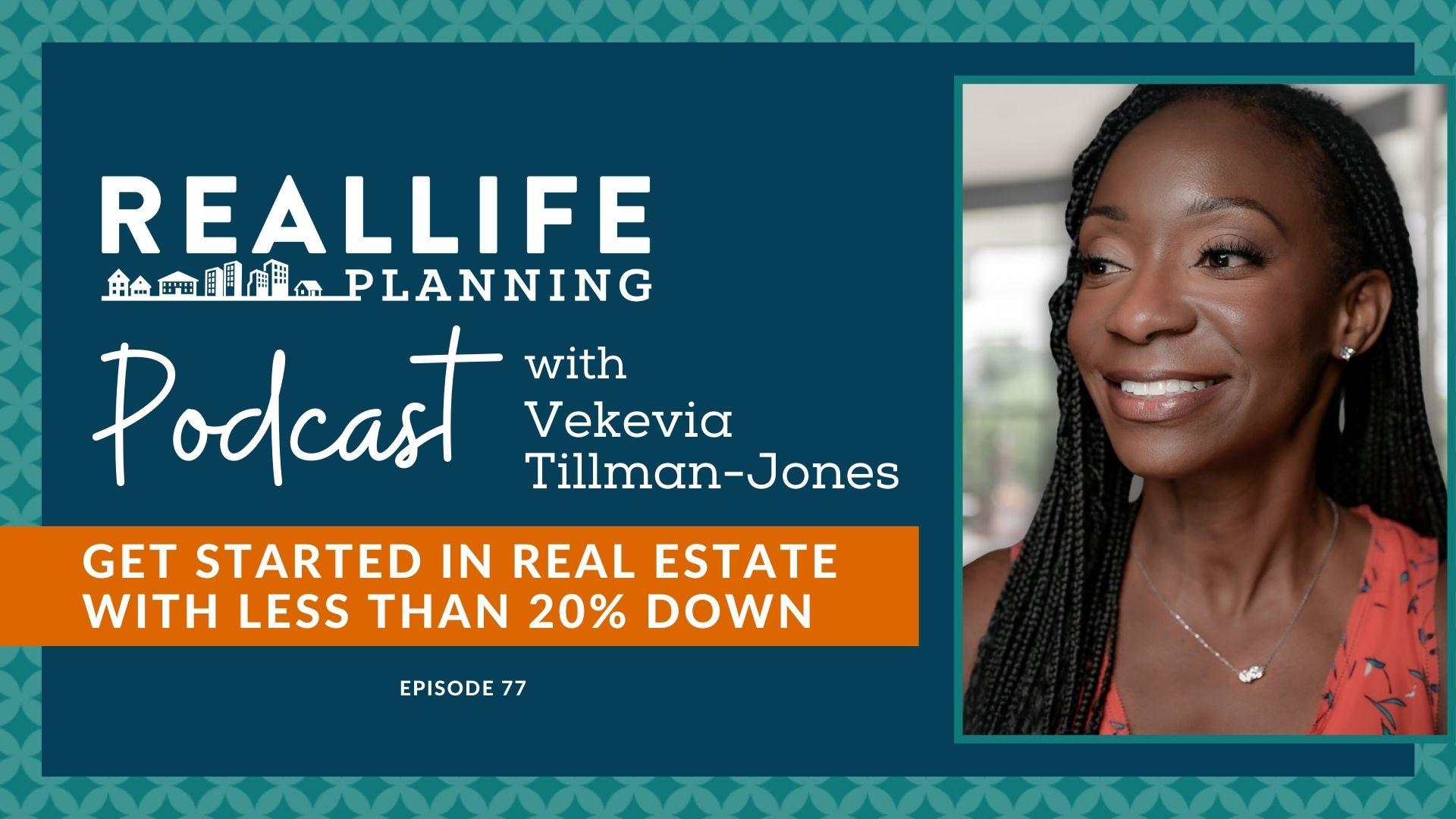
Get Started in Real Estate with Less Than 20% Down | Real Life Planning Podcast Episode 77
Real Estate CoachingIn Episode 77 of the Real Life Planning Podcast, Vekevia Tillman-Jones, CFP®, MBA, breaks down how you can become a real estate investor without needing the traditional 20% down payment. She walks through FHA vs. conventional loans, key differences in mortgage insurance, and how your credit score and debt-to-income ratio affect your options. Whether you're considering house hacking or investing in a multi-family rental, this is a must-listen for first-time buyers who want to start building wealth without waiting years to save.
This week on Real Life Planning Podcast:
| 💡 | What are the differences between FHA and conventional loans? [00:00:27] |
| 💡 | How does your credit score impact your eligibility for low down payment options? [00:01:13] |
| 💡 | What’s the real deal with mortgage insurance (PMI vs. MIP)? [00:02:08] |
| 💡 | Can you house hack a multi-unit property with one of these loans? [00:05:30] |
| 💡 | Why putting less than 20% down doesn’t mean you have to delay investing [00:06:33] |
Takeaway Quotes:
"You might be able to get started in real estate sooner than you think—if you know what loan options are available to you." — Vekevia Tillman-Jones
"With the right loan, you could buy a four-unit property and start house hacking with just 3% down." –Vekevia Tillman-Jones
Connect with Real Life Planning:
About the Real Life Planning Podcast
Hosts Cynthia Meyer and Vekevia Tillman-Jones explore practical steps for real estate investors to build financial freedom and make working for someone else optional.
If you like this video podcast, consider joining Real Life Planning’s Question of the Week where our CERTIFIED FINANCIAL PLANNERs™ and rental property business owners answer the most common questions about real estate financial planning direct to your inbox.

This blog is for general financial education purposes. Information contained in this blog should not be construed as financial, tax, real estate, legal, or investment advice. For educational purposes, blog posts may contain links to other websites which are not under the control or and are not maintained by Real Life Planning. Real Life Planning has provided those links for your convenience but does not necessarily endorse all the material on those sites. Please consult your financial, real estate, legal, or tax advisor for advice specific to your situation.