
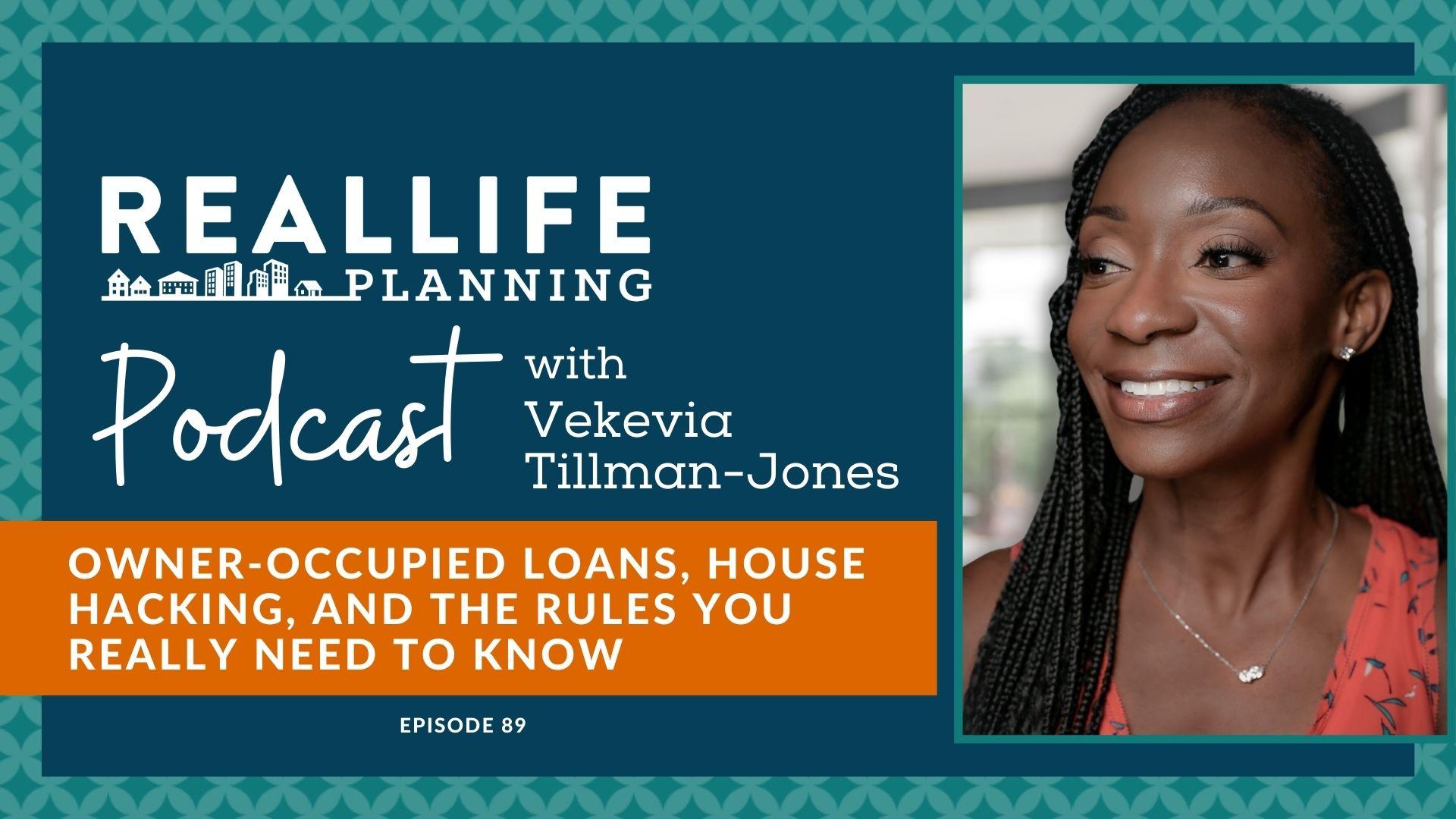
Owner-Occupied Loans, House Hacking, and the Rules You Need to Know | Real Life Planning Podcast Episode 89
Real Estate CoachingIn Episode 89 of the Real Life Planning Podcast, Vekevia Tillman-Jones, CFP®, MBA, addresses the real guidelines behind owner-occupied loans so you can build wealth without accidentally crossing a line. From the one-year occupancy rule to the differences between FHA and conventional loans, she explains in real people language what lenders actually mean when they say you must “live in the property.” This episode is for financial education purposes only. Please see an attorney for legal advice.
This week on Real Life Planning Podcast:
| 💡 | What does “owner-occupied” really mean to lenders? [00:01:12] |
| 💡 | What is the one-year occupancy rule, and how strictly is it applied? [00:02:17] |
| 💡 | How do FHA and conventional loans differ for house hacking? [00:03:06] |
| 💡 | When can you buy another home and keep the first one as a rental? [00:05:13] |
| 💡 | What counts as occupancy fraud, and how can you avoid it? [00:06:04] |
Takeaway Quotes:
" Owner-occupied does not mean you cannot rent out part of the property. That is exactly why house hacking exists." — Vekevia Tillman-Jones
" The best loan is the one that fits your finances, your credit, the type of property you're buying in your long-term plan." — Vekevia Tillman-Jones
Connect with Real Life Planning:
About the Real Life Planning Podcast
Hosts Cynthia Meyer and Vekevia Tillman-Jones explore practical steps for real estate investors to build financial freedom and make working for someone else optional.
If you like this video podcast, consider joining Real Life Planning’s Question of the Week where our CERTIFIED FINANCIAL PLANNERs™ and rental property business owners answer the most common questions about real estate financial planning direct to your inbox.

This blog is for general financial education purposes. Information contained in this blog should not be construed as financial, tax, real estate, legal, or investment advice. For educational purposes, blog posts may contain links to other websites which are not under the control or and are not maintained by Real Life Planning. Real Life Planning has provided those links for your convenience but does not necessarily endorse all the material on those sites. Please consult your financial, real estate, legal, or tax advisor for advice specific to your situation.