

How to Create an Estate Plan for Your Online Accounts
Financial PlanningBy Cynthia Meyer, CFA®, CFP®, ChFC®
What you will get from this article:
Most estate plans are designed to handle what happens to your assets when you pass away, but they haven’t all fully caught up with how we live today. With social media accounts, online portals to pay bills, and automatic debits, our robust digital lives add a new dimension to the contingencies we need to plan for in advance.
Who will pay the mortgages and utilities? Who has your passwords? Who can shut off your automatic payments? All of these are things that we urge investors to think about in advance.
In this article, we’ll walk through what a digital estate plan is, what it should include, and how real estate investors can use it to help keep important accounts, records, and responsibilities organized.
What is Digital Estate Planning?
Digital estate planning is the process of deciding what should happen to your online accounts and assets ahead of time, so that if you pass away, your digital life is handled in the way you wish. Having a digital estate plan is an essential part of a well-constructed estate plan, especially in today’s environment, where more of our lives – and businesses – are taking place online.
For real estate investors, this can be especially important. Your rental property business may rely on online banking, mortgage portals, property management software, utility accounts, insurance documents, tenant records, lease storage, bookkeeping systems, and other digital tools that someone may need to access if you are no longer able to manage them yourself.
An estate plan is a list of instructions for what happens to everything you own after you pass away. The digital aspect is another component of that, and it should be planned accordingly so the people handling your affairs can find the information they need and keep important responsibilities moving.
 What Does a Digital Executor Do?
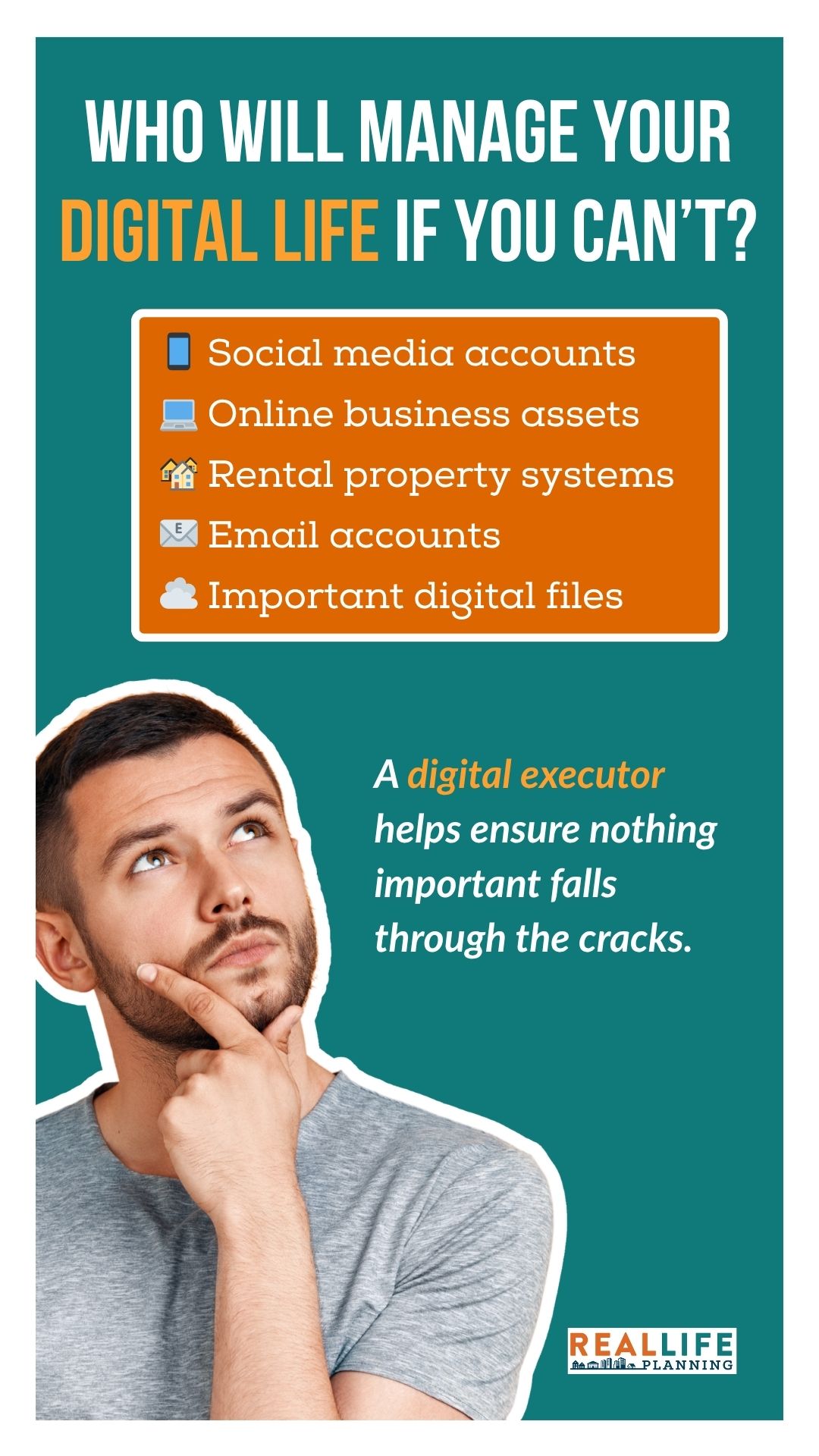
The first step to creating a digital estate plan is to choose a digital executor. This could be the same person as the executor in your will, or it could be someone else that you’ve specifically named in your will or trust. They are the person responsible for carrying out your wishes for your accounts and online life in the way that you’ve outlined.
Your digital executor should be someone trustworthy, organized, and comfortable with technology, so you can feel confident they’ll be able to handle the online aspects of your estate plan.
This is especially important if you have an online presence for your business or a significant social media following. You’ll want someone who will be a good steward of your online business or social media reputation after you’re gone.
For real estate investors, the digital executor may also need to know who to contact about the rental property business, such as a property manager, CPA, attorney, financial planner, or trusted family member. They may not need direct access to every account immediately, but they should know where key instructions are stored and who can help keep the business operating if needed.
You’ll want to let this person know that they’ve been chosen, as well as who to contact in the event that you pass away or cannot manage these things yourself. You may also want to appoint a backup person, in case they are unwilling or unable to execute your wishes.
What’s Included in a Digital Estate Plan?
A digital estate plan includes everything you want to happen to your digital life after you’re gone. A good place to start is by taking inventory of what you have, where it’s stored, and who may need access. From there, you can decide what should happen to each account or asset. That may include:
Financial accounts
- Bank accounts
- Brokerage accounts
- Credit cards
- Loan accounts
- Mortgages
- Utility bills
- Insurance policies
- Student loans
- Property management and rent collection software
Digital Media & Subscriptions
- Music
- Video
- Streaming
- Podcasts
Personal Online Accounts
- Email accounts
- Digital wallets
- Cloud storage
- Gaming
- Subscription services (Amazon Prime, groceries, medicine, etc.)
- Automatic billing arrangements
Business-related accounts
- Websites
- Blogs
- Podcasts
- Online stores
- Business software
- Client portals
- Payment platforms
- Other accounts tied to your work or business
Social Media Accounts
- X
- TikTok
- Other platforms
Having clear instructions can help reduce confusion, prevent important accounts from being lost or overlooked, and make it easier for your executor to manage your affairs in the way you want.
Digital Estate Planning for Real Estate Investors
For real estate investors, digital estate planning goes well beyond personal email accounts, social media profiles, and online banking.
Many rental property businesses rely on digital systems that someone else may need to access if you are no longer able to manage them. For many investors, digital estate planning is an important part of a contingency plan: making sure rent can still be collected, bills can still be paid, and the rental property business can continue operating while longer-term decisions are being made.
As you build your digital estate plan, you’ll want to include digital access for your real estate business:
- Property management software and any tenant portals
- Online platforms for rent collection
- Mortgage and loan accounts
- Utility accounts
- Insurance policies
- Lease agreements and tenant records
- LLC and business documents
- Bookkeeping and tax software
- Contact information for your property manager, CPA, attorney, and financial planner
Clarify Your Wishes So Your Family Knows What to Do
 Another part of the process is deciding what you actually want to happen to those accounts. For some people, that may mean closing accounts after death. Others may want a website, blog, podcast, or online business to continue operating. In some cases, there may even be digital assets that can be transferred or sold.
The more specific your instructions are, the easier it will be for your digital executor to carry out your wishes. Start by asking yourself:
- Should this account or platform be taken down, preserved, transferred, or turned into a memorial page?
- Who should manage this account or online platform if something happens to you?
- If this account generates income, should it continue operating or be shut down?
- Who takes over management of the rental property business or related digital accounts?
- Are there digital assets, websites, or business accounts that could be sold?
- What should happen to your website, blog, podcast, online store, or other business-related accounts?
- Do the user agreements for each platform allow your wishes to be carried out?
- Are your instructions clear enough for your digital executor to follow without guessing?
The goal with your digital estate plan is to avoid leaving your executor or family to piece together the business from scattered emails, passwords, and account statements.
Where Should You Store Your Digital Estate Plan?
 The process of gathering all of that information and deciding how to share it is very important because you don’t want to risk identity theft or your information being exposed. Writing things down exposes you to the risk of someone finding the information and accessing your accounts.
One option is to use a password manager that uses encryption to keep your passwords safe behind one strong master password. Many of these services will also prompt you to update your weaker passwords or make changes if a certain account is exposed in a hacking situation.
If you do set up a password vault, you want to make sure that your digital executor has access to the master password. Some password vaults have a system for this, but you could also leave it with your attorney or even leave the password in your safe.
Each option comes with its own level of risk, but it’s even riskier to have your entire online life locked up with no way for your survivors to gain access.
Your Rental Property Business Doesn't Stop
Planning for what happens to your online life after you pass away is an important part of estate planning. It tells your designated digital executor what you want to happen to your accounts and how you want things handled. Including written or video instructions that tell your executor exactly what you want to happen is the best way to ensure your wishes are carried out after you’re gone.
For real estate investors, that may include keeping a rental property business functioning during a difficult transition; rent still needs to be collected, bills still need to be paid, and important property records still need to be accessible.
Estate planning is a piece of financial planning that many people resist because nobody wants to think about what happens when they’re gone, but proactively planning is a gift to the people you leave behind. In case of an emergency, it can be what keeps your real estate business or online presence going.
If you’re building or operating a rental property business, check out the Real Life Planning Blog for more resources to help you think through the financial decisions that come with real estate investing.