

What Does a Real Estate Bookkeeper Do?
Real Estate CoachingBy Cynthia Meyer, CFA®, CFP®, ChFC®
What you will get from this article:
Do you know how each property in your portfolio is actually performing, where your money is going, and whether you’re ready for tax time? Maintaining accurate books gives you insight into the real time health of your real estate business. Good bookkeeping can help you understand which properties may be dragging down the performance of your portfolio, or what expenses may be eating your cash flow.
In this article, we’ll talk about:
- What a real estate bookkeeper does
- What real estate investors should be tracking
- When it may make sense to outsource to a bookkeeping professional who understands real estate
Running the numbers doesn’t stop when you buy a property
Real estate investors usually spend lots of time running the numbers before they buy a property. They look at the purchase price, projected rental income, expected expenses, the terms of their financing, and estimated cash flow to get an understanding of how they expect their property to perform.
But once the property is actually in the portfolio, investors don’t always give the numbers the same amount of attention anymore. It’s easy to always put the focus onto what’s next, and that can be a problem.
A rental property is not just an investment you can buy and forget about. Whether you own one property or twenty, real estate has to be operated like a business.
Rent comes in, repairs go out, insurance premiums change, taxes increase, and so on. A property that looked like it should perform well in projections may not perform as well once real life starts happening.
That’s where a good real estate bookkeeper becomes so important.
Why Real Estate Investors Need More Than Tax Reports
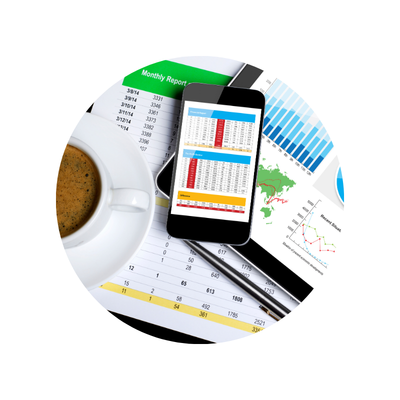 For many real estate investors, bookkeeping is something to think about at tax time. They gather all their receipts and download statements to try and piece together what happened over the past year with their CPA.
That may be enough to file a return, but it’s not enough to understand how your real estate business is actually performing.
By the time tax season arrives, the year is already over. If expenses were higher than expected, the opportunity to make adjustments for the year may have already passed. This is especially important for growing investors.
When you own one rental property, it feels easier to keep track of the numbers in your head. But as you add more doors or set up more entities, that becomes harder to do. Tracking more bank accounts, more repairs, more financing arrangements, etc. can get much more complicated to manage by memory.
Your real estate portfolio expressed in numbers
Good bookkeeping can give you a clearer picture of what’s going on in your portfolio while there’s still time to do something about it. This can also help you get into the mindset of running your real estate portfolio like an actual business.
Clean books can help you see if:
- Each property is actually cash flowing
- Expenses are being categorized correctly or not
- Personal and business finances are staying separate
- Your records are organized in the way your CPA needs them for taxes
Real estate income may be treated as passive on the tax return, but rental property ownership is a business. Properties need to be managed, expenses need to be tracked, and major decisions need to be made with real information.
Your books tell the story of your real estate portfolio in numbers. Without that data, it’s hard to know whether the portfolio is truly supporting your business goals.
What a Real Estate Bookkeeper Does
 A real estate bookkeeper helps organize the financial activities of your rental property business so you can see what’s happening in the portfolio.
That usually starts with cleaning up the books. If records haven’t previously been maintained consistently, a bookkeeper may need to review past transactions, categorize income and expenses, reconcile your accounts, and make sure the books are organized in a way that makes sense for a real estate business.
From there, a real estate bookkeeper can help on a monthly basis with things like:
- Categorizing income and expenses
- Reconciling bank and credit card accounts
- Tracking activity by property, business, or entity
- Reviewing your balance sheet and profit and loss statements
- Preparing clean records for your CPA
For real estate investors, it’s important to have someone who can do these things by property. If all the income and expenses are grouped together, you may be able to see how the portfolio is doing as a whole, but it can be harder to see which properties are actually performing well and which ones are pulling down your performance.
One thing to keep in mind is that a bookkeeper is not the same thing as a CPA. Your bookkeeper isn’t necessarily filing your tax return or creating a strategy, but they’re helping you build financial foundations.
When your books are clean and current, you can have better conversations with your CPA and real estate financial planner. You can look at what happened during the year and understand how each property is performing to make more informed decisions about your portfolio.
How to Start a Bookkeeping System for Your Rental Properties
If you don’t have a bookkeeping system for your real estate business yet, the first step is separating your personal and business transactions. That means having:
- A dedicated bank account for the business
- A dedicated credit card for property-related expenses
- A system for managing your receipts, invoices, statements, and other records all in one place
A dedicated email address can also help make bookkeeping easier. If repair invoices, utility bills, statements, and other business documents are all in the same place, it’s easier to find what you need later.
From there, you’ll want to have a system that allows you to track income and expenses by property, whether you have one rental or a larger portfolio. If everything’s grouped together, you won’t be able to see how each property is performing.
Do I need real estate bookkeeping software?
For an investor with one or two rental properties, a spreadsheet may be enough to get started. You can download bank and credit card statements and categorize expenses and income by property. Make sure to organize your records by the Schedule E expense categories.
You can also try an easy app like Stessa or RentRedi for all in one property management and accounting for the small landlord.
As your portfolio grows, however, accounting software like QuickBooks can be useful, especially when there are multiple properties, multiple entities, or more complex transactions to track.
The ultimate goal with your bookkeeping system is to make your books useful throughout the year and easier to hand off at tax time. A simple system that’s kept up to date is usually much more valuable than a complicated system that nobody maintains.
What Investors Should Look At Every Month
Bookkeeping is most useful when you actually look at the numbers. You don’t just want clean records that can sit in QuickBooks or a spreadsheet; you want to use those records to understand the story they’re telling you about your business’ performance.
At a minimum, real estate investors should review their profit and loss statements and balance sheet every month. The profit and loss statements can help you see income, expenses, and cash flow. The balance sheet can help you understand what your business owns, what it owes, and whether the accounts are being tracked correctly.
The reports don’t have to be anything too complicated, but they do need to be current and accurate enough to tell you what’s going on. Each month, you want to see:
- Income and expenses by property
- Cash flow by property
- Repairs, maintenance, utilities, insurance, and property taxes
- Administrative expenses and recurring subscriptions
- Bank and credit card reconciliations
- Any transactions that might look unusual or need to be reclassified
- Budgeted numbers compared with actual results
Reconciling your statements with your reports is a key part of making sure the reports are reliable and showing you the true picture.
By reviewing these things monthly, you can see patterns that are easier to miss during the year. Maybe a subscription that auto-renews is dragging on your cash flow, or utility bills are coming in higher than expected. Those are things you’ll want to know well before the next tax season.
When you review the numbers consistently, you’re in a better position to make decisions within your business.
 When It May Be Time to Hire a Real Estate Bookkeeper
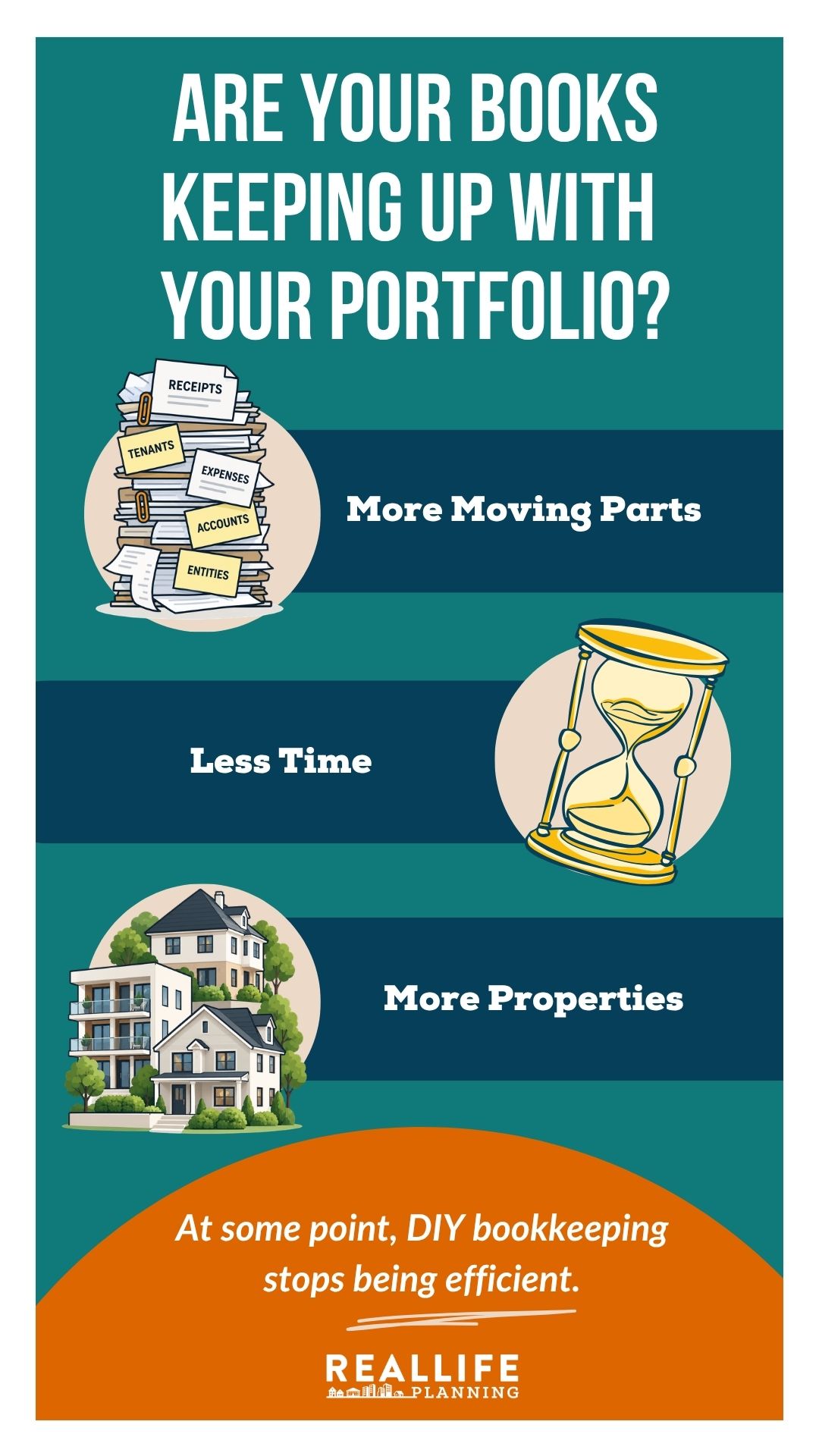
Some real estate investors can manage their own bookkeeping for a while, especially when the business is relatively small. But as the portfolio grows, the bookkeeping usually becomes more time-consuming. There may be more accounts to reconcile, more properties to track, more entities involved, and more transactions to categorize every single month.
If you’re always behind on your books, that may be a sign it’s time to outsource. The same is true if tax season feels stressful every year because you’re trying to organize twelve months of records all at once.
It may also be time to hire if you don’t feel like you have a clear view of how each property is performing every month, your accounts aren’t being regularly reconciled, or you’re not confident that your records are organized properly for your tax professional.
Another thing to keep in mind is that you may be perfectly capable of categorizing your transactions and reconciling your accounts. But if that work is taking time away from other priorities like finding new deals, outsourcing can be a way to buy back your time.
Good bookkeeping should give you peace of mind, not create more stress. When books are current and organized, you can spend less time trying to figure out what happened and truly focus on what comes next.
Why a Real Estate-Specific Bookkeeper is Important
Real estate books have many details that may not come up in other types of small businesses, so it may be beneficial to work with a bookkeeper with a real estate specialty.
A general bookkeeper may be able to categorize basic income and expenses, but real estate investors often have transactions that require more specific knowledge. If those transactions are not handled properly, the books may not accurately reflect your portfolio.
A common example is a closing statement. When a property is purchased or sold, the bookkeeper cannot simply take the net cash number at the bottom of the statement and put it into one category. The individual items on the closing statement need to be reviewed and correctly categorized.
Some costs need to be capitalized, some may be expensed, and some may affect the property’s basis. If the information isn’t categorized correctly, it can affect the numbers your CPA uses for depreciation and tax purposes.
Real estate bookkeepers may also need to understand how to handle:
- Earnest money deposits
- Construction draws
- Principal, interest, and escrow payments
- Repairs versus capital improvements
- Closing costs on purchases and sales
- Multiple entities or LLCs
- Holding companies and operating companies
- Long-term rentals, short-term rentals, flips, or development projects
- Hard money loans or other creative financing arrangements
Your specific investment types are crucial to understand, as well, because the bookkeeping for a long-term rental may look different than that for a flip or short-term rental. That’s why real estate investors should be careful before assuming any bookkeeper can handle their books correctly.
The right bookkeeper should understand the kind of real estate investing you’re doing and how to organize the financial side of your business.
Questions to Ask a Real Estate Bookkeeper
 If you’re considering hiring a bookkeeper for your rental property business, you’ll want to ask questions beyond availability and pricing. You want to understand whether they truly understand the types of transactions that show up in a real estate portfolio and have experience with real estate investors.
Some questions you’ll want to ask include:
- Have you worked with real estate investors before?
- What types of investors do you work with (long-term rental owners, short-term rental owners, flippers, developers, or lenders)?
- How do you track income and expenses by property?
- How do you handle closing statements?
- How do you book earnest money? How do you handle construction draws?
- How do you separate principal, interest, and escrow payments?
- How do you organize books when there are multiple entities or LLCs?
- Can you provide sample reports for a real estate investor?
A bookkeeper who understands real estate should be able to confidently explain how they’d organize books, track activity by property, and prepare reports that are useful year-round, not just at tax time.
Better Books Can Help You Make Better Decisions
Bookkeeping may not be the most exciting part of real estate investing, but it’s one of the most important systems in the business.
Clean books help you understand what’s actually happening inside your portfolio. They can show you whether each property is cash flowing, where expenses are increasing, whether your records are ready for tax season, and how your portfolio’s performance is comparing to your expectations.
That information can help you scale your real estate business, because growth isn’t always about buying the next property.
Sometimes, the opportunity is in paying closer attention to the properties that you already own. Good bookkeeping gives you the data to understand which properties are performing well and which ones are dragging the portfolio down.
If you’re a real estate investor looking for more tips and insights around rental property ownership, check out more from the Real Life Blog. If you’re looking for help understanding how your rental portfolio is supporting your cash flow, tax planning, and long-term goals, reach out to the Real Life Planning team.